
 EN


How Stainless Steel BBQ Tongs Improve Control and Reliability for Outdoor Camping
A practical engineering guide for buyers sourcing durable barbecue tools for outdoor cooking, camping and private-label programs.
Overview
Outdoor cooking places unusual demands on a simple tool. BBQ tongs must grip food securely, remain comfortable during repeated handling and withstand heat, moisture and transport between the kitchen, campsite and grill station. For buyers, the challenge is not only choosing a familiar shape. It is selecting a stainless steel BBQ tong design that can deliver consistent handling across real outdoor conditions while remaining suitable for efficient sourcing and private-label development.
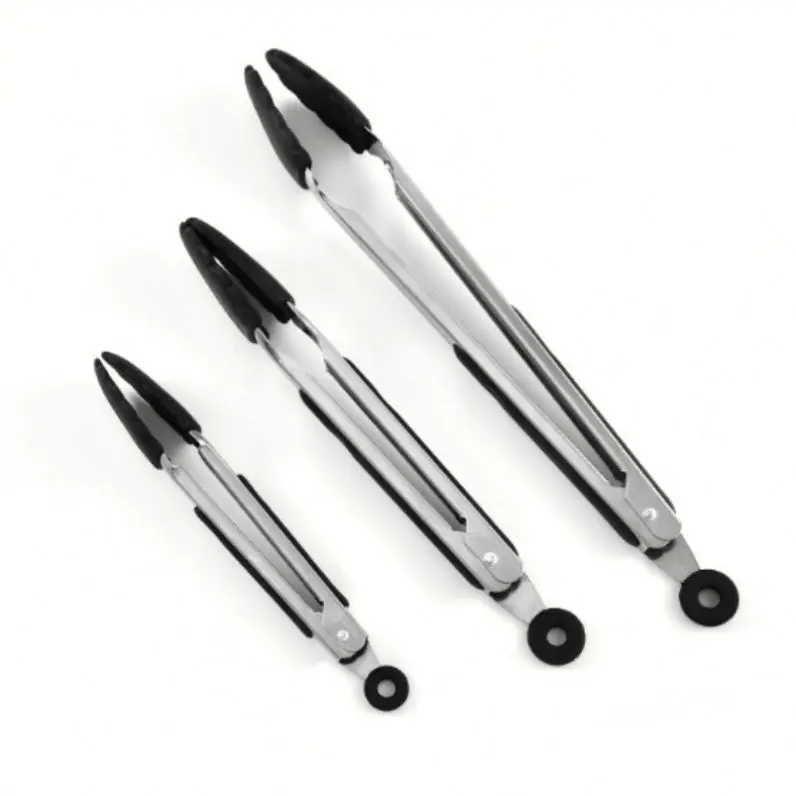
Hanchuan Industrial Group positions its stainless steel BBQ tongs around this practical use case: dependable control for grilling, camping and outdoor food preparation. The product concept is intentionally straightforward. Stainless steel provides a clean, durable platform, while the tong geometry, joint, handle finish and locking arrangement determine how the tool feels in use. These are the details that influence perceived quality long after the first purchase.
This guide explains the main engineering and procurement questions behind stainless steel BBQ tongs. It focuses on what can be assessed from the product category and the supplied brief, while leaving unconfirmed dimensions, grade, surface treatment, packaging and certifications for final technical confirmation with Hanchuan Industrial Group.
Stainless Steel BBQ Tongs at a Glance
| Key Metric / Parameter | Engineering Specification | Operational Impact & Benefit |
|---|---|---|
| Product category | Stainless steel BBQ tongs | Reusable control tool for grilling and outdoor cooking |
| Primary use | BBQ, outdoor camping and food handling | Supports portable and backyard cooking workflows |
| Material basis | Stainless steel; exact grade to be confirmed | Durable, cleanable platform when correctly specified |
| Product structure | Tong arms, gripping ends and pivot assembly | Determines control, opening action and service feel |
| Grip geometry | To be confirmed by selected model | Should balance reach, control and hand comfort |
| Surface finish | To be confirmed | Influences appearance, cleanability and scratch visibility |
| Edge condition | Smooth, burr-free requirement | Reduces handling risk and improves perceived quality |
| Joint performance | Smooth movement and stable alignment required | Supports repeatable turning and lifting |
| Storage format | To be confirmed | Affects camping packability and retail presentation |
| Packaging | To be confirmed | Protects finish and enables private-label presentation |
| Compliance evidence | To be confirmed by buyer specification | Prevents unsupported material or performance claims |
Pain Point 1: Grip Control in Outdoor Cooking
The buyer's dilemma is familiar: a tong that is too flexible can make it difficult to turn food accurately, while an overly rigid or poorly balanced design can cause hand fatigue. Outdoor users also work around uneven surfaces, changing weather and limited preparation space. A tool that performs acceptably in a domestic kitchen may feel less controlled beside a portable grill or campsite fire.
The Hanchuan engineering focus is the relationship between the tong arms, gripping ends and pivot. A balanced arm length can provide useful reach without making the tool unwieldy. Textured or shaped gripping ends can help stabilize food during turning, lifting and serving. The exact jaw profile should be matched to the intended application, whether the program is focused on meat, vegetables, skewers or mixed barbecue service.
For a sourcing team, the key validation step is a handling test with representative food loads. Check whether the jaws meet evenly, whether the pivot remains smooth after repeated cycles and whether the handle stays comfortable when the user wears heat-resistant gloves. These observations are more meaningful than appearance alone.
Pain Point 2: Moisture, Heat and Repeated Cleaning
BBQ tools are exposed to grease, food residue, humidity and frequent washing. Camping adds another variable: the product may be stored in a damp bag or transported with other equipment. If the metal surface, joint or spring mechanism is difficult to clean, residue can accumulate and affect both hygiene perception and service life.
Stainless steel is a practical material platform for this category because it supports a durable, cleanable product construction. However, the purchasing specification should still identify the stainless steel grade, surface finish, edge treatment and any dissimilar-metal components. These details should not be assumed from the phrase 'stainless steel' alone. Hanchuan Industrial Group should confirm the exact grade and finishing process for the selected model before mass production.
A useful quality-control sequence includes visual inspection for burrs and sharp edges, functional cycling of the joint, cleaning simulation and a corrosion-resistance test appropriate to the selected material and finish. The acceptance standard, test duration and reporting format should be agreed in the purchase specification rather than left to interpretation.
Pain Point 3: Safe, Comfortable Handling Around the Grill
A barbecue tong is a hand tool used near a hot cooking surface. The user needs enough reach to keep hands away from the immediate heat zone, but still requires precise feedback through the handle. Smooth edges, a stable grip and an intuitive opening action all contribute to safer operation. For camping, a locking or storage feature can also reduce clutter during transport, provided the mechanism is reliable and easy to release.
The design review should therefore examine the complete hand-to-food interaction: opening force, return action, grip shape, exposed edges, joint access for cleaning and storage behavior. Hanchuan Industrial Group can use this review to align a base model with a buyer's target market, packaging format and private-label requirements. Any heat-resistance claim for handle components must be supported by the actual material specification and test evidence for the chosen configuration.
The practical comparison is not simply 'metal versus plastic'. It is whether the complete assembly provides predictable control, acceptable cleaning access and a comfortable grip over the intended use cycle.
Manufacturing Priorities for a Reliable BBQ Tool Program
For importers and outdoor-living brands, manufacturing reliability matters as much as the initial product concept. A consistent BBQ tong program requires controlled forming, smooth edge finishing, stable joint assembly and repeatable surface appearance. Small variations in jaw alignment or pivot tightness can be noticeable in a hand tool, especially when a buyer sells the product as part of a premium camping or barbecue set.
Before approval, procurement teams should request the product drawing or dimensional control plan for the selected model, along with the material declaration, sample approval record and inspection checklist. The supplier should also clarify which processes are performed in-house and which are handled by qualified partners. These documents create a traceable basis for quality decisions without relying on unsupported marketing claims.
Packaging should be reviewed as part of the product, not as an afterthought. The final plan should define unit packaging, carton configuration, protection against scratching, barcode or label requirements and whether the product is sold individually or in a BBQ tool set.
Target Materials and Production Scenarios
Technical and Procurement FAQ
What stainless steel grade is used?
The exact grade is not specified in the supplied brief. Confirm the grade, applicable material standard and supplier documentation for the selected model before approval.
Are the tongs suitable for camping?
They are positioned for outdoor camping use. Buyers should confirm stored dimensions, weight, packaging protection and the intended grill or cooking setup.
Can the tong length or jaw shape be customized?
Customization feasibility depends on the selected structure, tooling and order quantity. Request a drawing review before assuming a non-standard configuration is available.
How should edge safety be checked?
Inspect all formed edges, jaw tips, handle transitions and the pivot area. The acceptance standard should define the allowable edge condition and inspection method.
Can the product be sold as part of a BBQ set?
Yes, a tong can be evaluated as an individual item or as one component of a barbecue tool set. Confirm accessory matching, packaging and set-level quality control.
Is dishwasher suitability confirmed?
It is not confirmed by the current brief. The buyer should request a configuration-specific cleaning or dishwasher test result before using that claim.
What should be included in the purchase specification?
At minimum: material grade, dimensions, surface finish, joint behavior, edge condition, packaging, labeling, inspection plan and any required testing or certification.


 Hot News